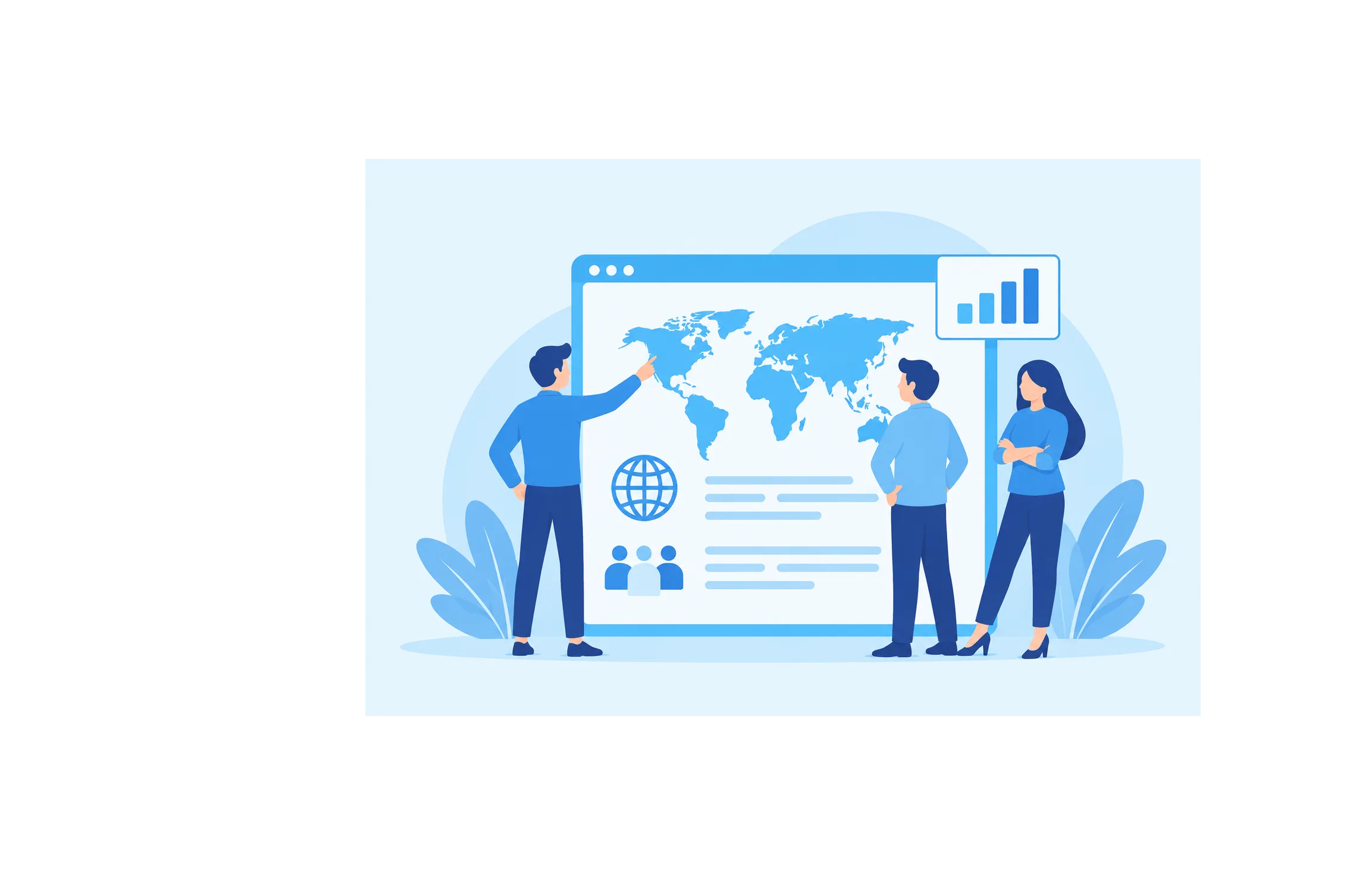
Global Strategy Advisors is an international business advisory firm serving clients across multiple continents, with roughly 750 users distributed across the United States, EMEA and Asia-Pacific. Its business units carry distinct technology and compliance obligations, and its IT strategy has to deliver a consistent experience worldwide while keeping data inside the right borders. For years that meant Citrix. Today it means Kasm Workspaces.
A VDI estate that had become a liability
Traditional VDI was designed for an on-premises world. Citrix Virtual Apps and Desktops asks for a chain of interconnected components, StoreFront servers, NetScaler appliances, licensing servers and specialized client software, and every link in that chain is something to deploy, replicate across regions, monitor and patch.
For the firm’s network engineering team, the patching never stopped. Critical vulnerabilities with CVSS scores of 8 to 10 arrived across the client, the NetScaler tier, StoreFront and the licensing infrastructure. These were not maintenance-window fixes; they demanded immediate attention, interrupted operations and consumed the hours IT had meant for strategic work. The team’s Senior Director of Network Engineering describes the pattern plainly:
“A vicious cycle of patching stuff, securing Citrix, putting Citrix behind a firewall… putting it behind VPN.”
The breaking point: three years or nothing
The security burden alone might have been tolerated. What tipped the decision was commercial. Following Citrix’s acquisition by a private equity firm, contract terms hardened. Global Strategy Advisors wanted to align its VDI procurement with a business automation program already under way, and asked for a one-year agreement.
“We went back to Citrix and said, ‘Can you give us a one-year deal?’ And they essentially came back and said, ‘No, we will not give you a one-year deal. You can commit to three years, or you can go pound sand.’”
WHERE THE INCUMBENT FELL SHORT
 Critical CVEs (8-10) recurring across four separately maintained tiers: client, NetScaler, StoreFront and licensing
- Client software on every endpoint to install, update and support
- Complex replication and synchronization to serve three global regions
- A three-year minimum commitment that did not fit the firm’s automation roadmap
A vendor that dictates terms is not aligned with the business it serves. The team began evaluating VDI platforms built for the cloud it was already running in.
Why Kasm: an architecture without the tiers
Kasm Workspaces is engineered as a containerized, microservices-based platform, which removes the supporting-component sprawl of legacy VDI at the architectural level rather than papering over it. Two things mattered most to Global Strategy Advisors.
Windows desktops without a client
Kasm encodes traditional RDP sessions into secure WebSocket streams. The firm kept its existing Windows Server infrastructure and gained a delivery model where any modern web browser is the client. Full RDP functionality is preserved; the client software, and every vulnerability it carried, is gone.
Regional deployments that scale sideways
Each region runs a primary Kasm Workspaces deployment supported by regional Connection Proxy servers. Data stays inside its jurisdiction, users connect to the nearest point, and capacity scales across AWS availability zones without the replication machinery the Citrix estate needed.
What changed
A smaller, simpler footprint
The firm reports roughly a 20% reduction in system nodes while maintaining equivalent functionality. Regional deployments were consolidated and standardized into a predictable footprint, and operational overhead dropped with them. IT time moved from routine maintenance and patching to strategic initiatives.
A smaller attack surface
“With Citrix, we had vulnerabilities in the Citrix client, vulnerabilities in the Citrix NetScaler, vulnerabilities in the StoreFront… just across the board.”
Browser-based access eliminated client-side vulnerabilities outright. The WebSocket-encoded RDP stream carries enterprise-grade encryption and works within the firm’s existing security policies and monitoring tools.
Users who did not need convincing
The firm’s 400-500 daily active users took to browser and Progressive Web App access quickly: familiar interfaces, no installations, better performance. With no client to support, help desk calls fell and device management simplified across the hardware estate.
VDI as code
The automation team found Kasm’s API robust enough to treat the VDI layer as infrastructure it could program. The team has already tied Kasm into another internal system through the API, workflows that would have been difficult or impossible on the legacy platform.
“I love the scalability; I love the API… We’re tying that in with the API and some automation to another system.”
Lessons for global deployments
- Plan geography early. Regional deployment is a strength, but the balance of performance, compliance and operations should be designed deliberately, not inherited.
- Bring automation and DevOps in at the start. The API opens integration opportunities that are not obvious from the migration plan alone.
- Budget a short adjustment period. The interface is intuitive, but features such as clipboard behavior differ from legacy environments; brief training smooths the transition.
Results
| Metric | Before | With | Impact |
|---|---|---|---|
 System nodes | Multi-tier Citrix estate with supporting components | Consolidated containerized deployments per region | ~20% fewer nodes |
 Attack surface | CVEs rated 8-10 across client, NetScaler, StoreFront, licensing | Browser-only access; WebSocket-encoded RDP | Client-side vulnerabilities eliminated |
 Endpoint software | Citrix client on every device | None; any modern browser or PWA | Fewer help desk calls |
 Data residency | Complex cross-region replication and sync | 3 AWS regions with regional Connection Proxies | In-jurisdiction by design |
 Automation | Vendor-defined, limited integration | API-first; integrated with internal systems | VDI managed as code |
 Commercial terms | Three-year minimum commitment | Flexible licensing aligned to planning cycle | One-year alignment restored |
Global Strategy Advisors continues to explore advanced containerized workflows and expanded application delivery on Kasm, applications and desktops delivered as containerized services rather than through traditional virtualization. For a firm that chose to lead the shift rather than follow it, the platform is a foundation for the next initiative, not technical debt to work around.